Switch Between Metric and Imperial Measurements Carefully
Keep lengths, areas and coverage rates consistent when converting a decorating estimate.
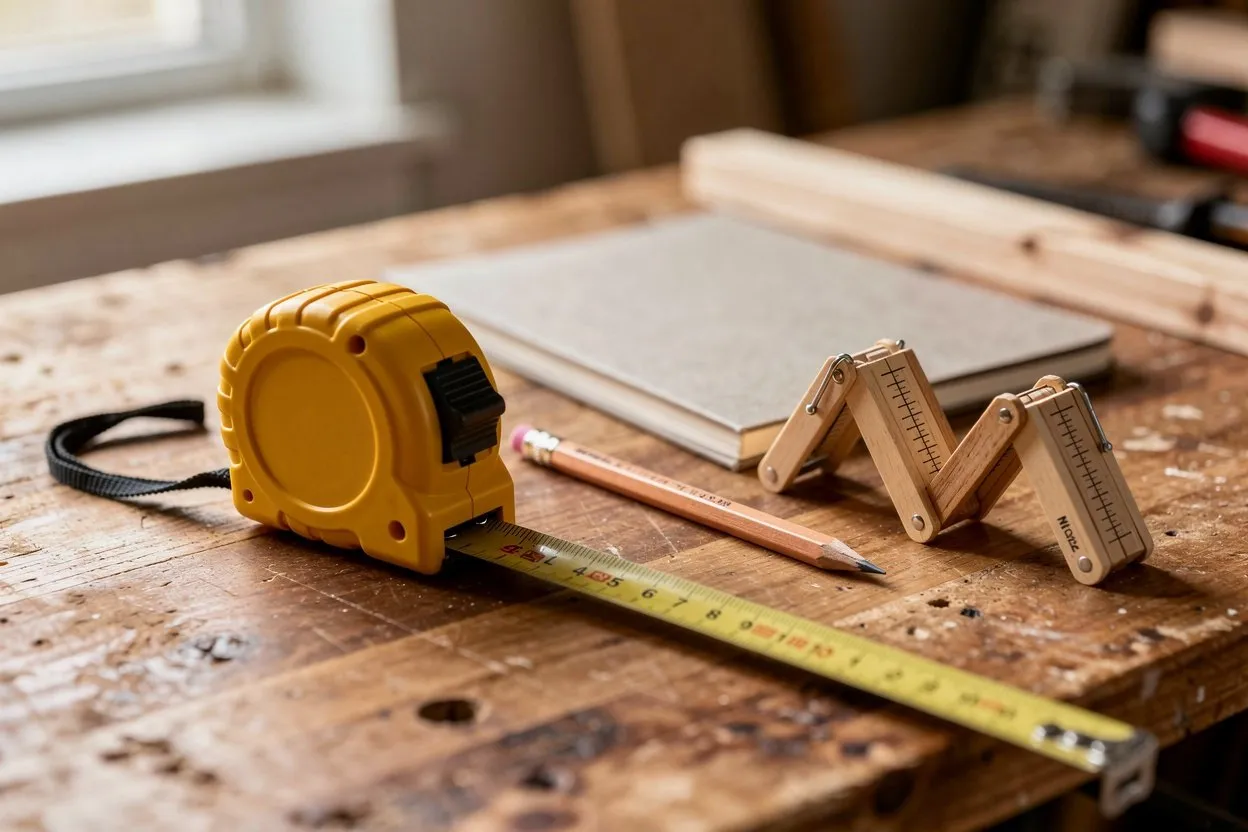
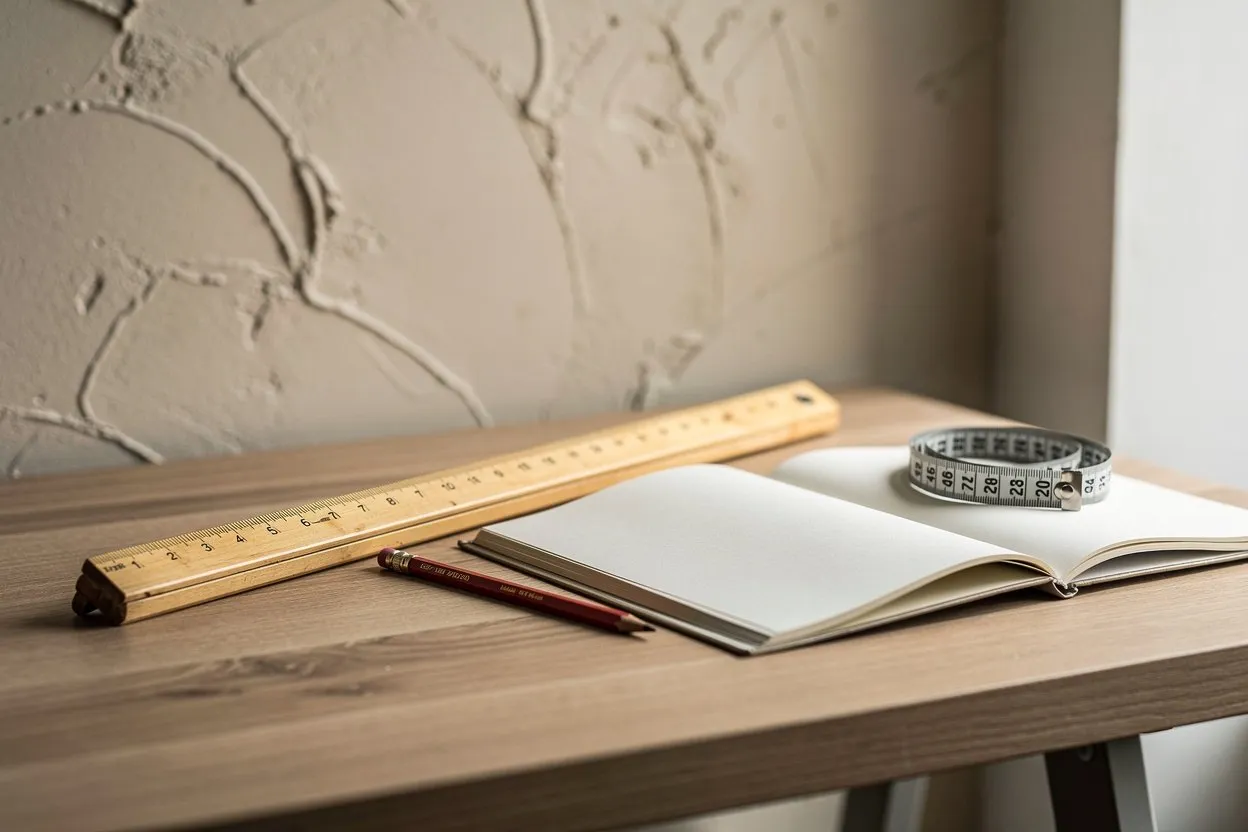
A decorating estimate can go wrong even when every individual number looks reasonable. Length, area and container volume use different conversion factors, and a coverage rate combines two units at once. The safest approach is to choose one working system for the calculation, convert the inputs deliberately and label the result. Never remove a unit from a note just to make the number look simpler.
Convert lengths before calculating areas
One inch is exactly 2.54 centimetres, and one foot is exactly 0.3048 metre. If a wall is 12 feet wide, its width is 3.6576 metres. You can convert each dimension and then multiply, or calculate the area in square feet and convert that area correctly.
The word square matters. One square foot is 0.09290304 square metre, because both dimensions are converted. Multiplying a square-foot area by the ordinary feet-to-metres factor gives the wrong result. Write “ft²” or “m²” beside area values so that they cannot be confused with wall lengths.
Keep gallons clearly identified
US and Imperial gallons are different units. One US gallon is about 3.785 litres, while one Imperial gallon is about 4.546 litres. A label that simply says “gallon” needs context before you use it in a conversion. Check the actual product sold in your market rather than borrowing a coverage number from a different package.
Coverage might be expressed as square metres per litre or square feet per US gallon. Convert both parts of the rate when changing systems. If that is inconvenient, leave the entire estimate in the product label’s units and convert only the final quantity if necessary.
Avoid rounding at every step
Keep a few useful decimal places while converting and calculating. Repeated rounding can shift the final result, especially when several rooms are combined. Round purchase quantities according to the actual container sizes after completing the calculation, rather than rounding each wall independently to a whole unit.
For example, a 10 by 8 foot wall has an area of 80 square feet, or approximately 7.432 square metres. Converting each dimension to 3.048 and 2.4384 metres produces the same area. That agreement is a helpful cross-check when you are unsure whether a conversion has been applied correctly.
Test the unit switch before saving
Use the paint calculator or wallpaper calculator with the units stated beside each input. When switching systems, check the labels and displayed values before accepting the result. Never assume that entering “10” means the same physical size after changing a selector.
Save the unit system alongside the room measurements and product details. If someone else will buy the materials, give them the original product units as well as the calculated quantity. A precise-looking number without its unit is less useful than a rounded, clearly labeled estimate that can be checked against the wall and the packaging.